SoundCloud
Open SoundCloud ↗2022 · Solo double bass
Melody I
The first and most concentrated work in the Melody series turns one double bass into a plural body, coaxing line from wood, buzz, pizzicato, overlapping voices and abrupt changes of pressure.
Listen / watch
Performance
Perusal
Inside the score
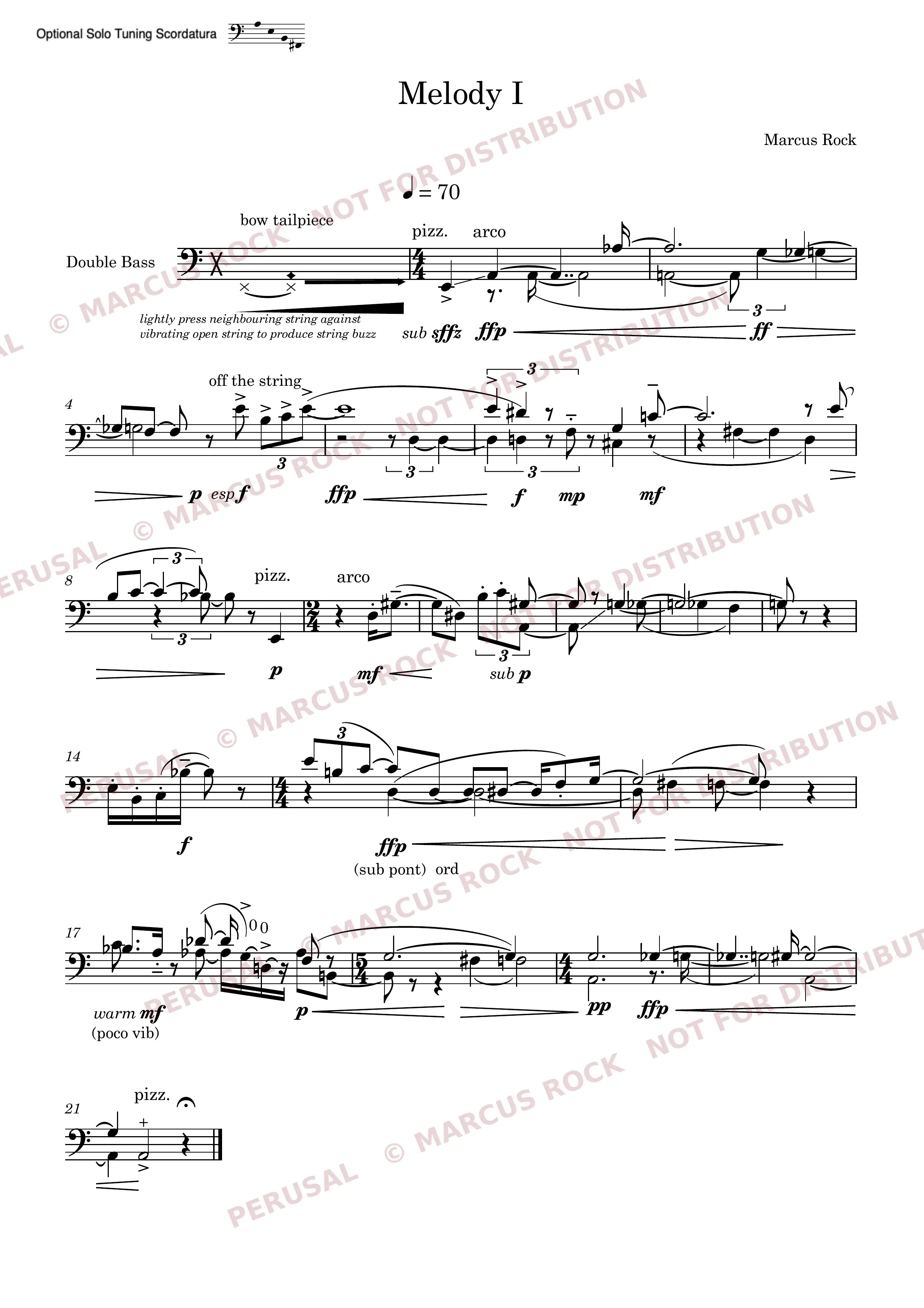
Selected pages are shown for private perusal. Full scores and performance materials are available by enquiry.
- Year
- 2022
- Forces
- Solo double bass
- Duration
- c. 2′00″
- Instrumentation
- Solo double bass, with optional solo scordatura
About the work
23 / 30Programme note
Melody I opens a series in which each numeral describes both the work’s position in the collection and the number of instruments it requires. As the first piece, it is a solo for double bass. The series’ governing question is already present in miniature: if melody is normally imagined as a single, continuous line, how might it instead arise from an instrument’s changing bodies, resistances and internal counterpoint?
The score begins before conventional pitch fully exists. The player bows the tailpiece while lightly pressing a neighbouring string against a vibrating open string, coaxing a buzz out of sympathetic contact. From this unstable physical threshold, pizzicato releases the first pitched impulse and the bow catches it, dividing it into sustained double stops, overlapping voices, accented splinters and sudden registral displacements. Optional solo scordatura further loosens the instrument from its familiar tuning. Melody is therefore not placed upon the double bass; it is excavated from wood, string, friction and resonance.
The music repeatedly tries to gather itself into continuity. Long slurs and held tones imply a cantabile line, only for it to fracture into off-the-string attacks, triplet flurries, rests and abrupt dynamic reversals. Pizzicato and arco act less as contrasting techniques than as different states of the same utterance: one initiates, while the other carries and distorts. In the later span, sub ponticello brightness gradually returns ordinario, then a ‘warm’ poco vibrato phrase briefly gives the line its most recognisably vocal form. Even here, the bass remains internally plural, sustaining one register while another interrupts or leans against it.
The ending strips the texture to a final left-hand pizzicato: a minute, bodily interruption produced by the same hand that has been defining the line’s pitches. It does not resolve the melody harmonically; instead, it returns melody to touch, leaving the preceding bowed resonance suspended around a dry, residual pluck. Melody I thus establishes the premise that the later pieces expand: melody is not simply a tune passed between instruments, but a relationship created whenever one sound presses against, answers or alters another.
History
Credits & performances
- World premiere
- Matthew Gaffney, double bass
Score & materials
Request the complete score.
For perusal, programming, performance materials or technical questions about this work, send a direct enquiry.